


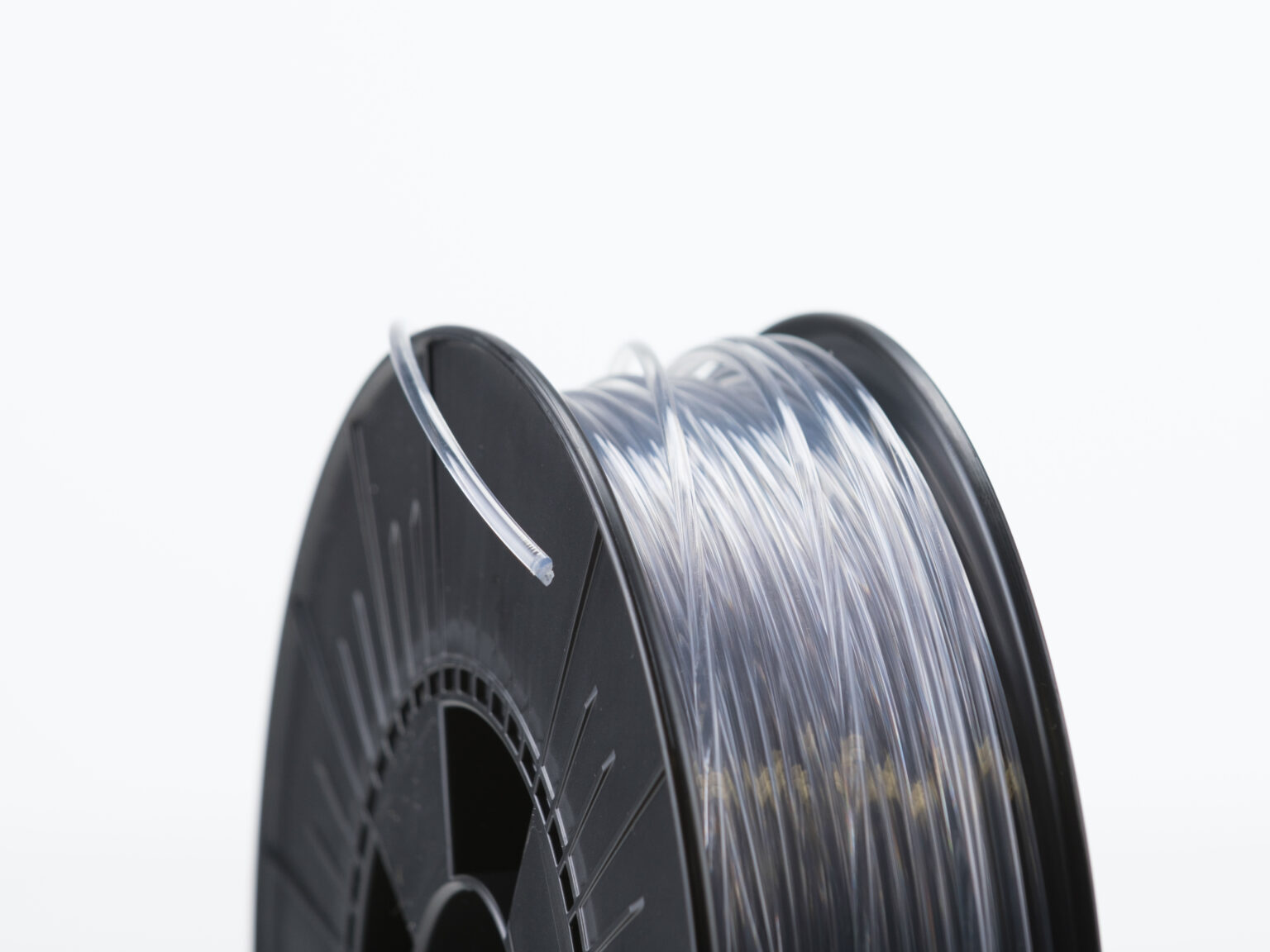


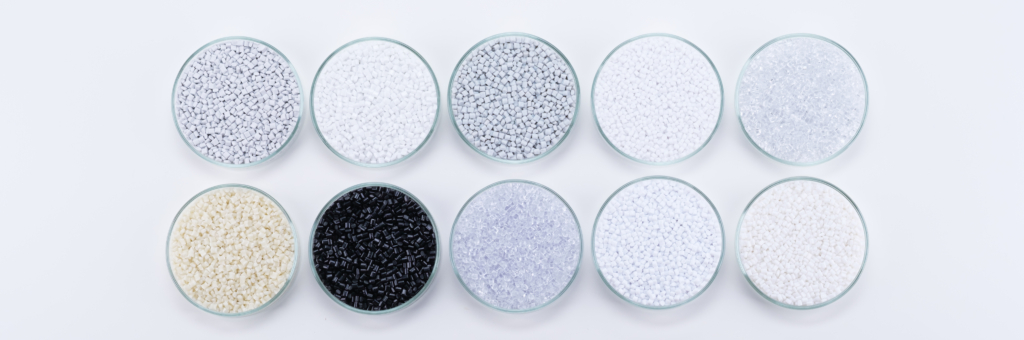
Polyethylene terephthalate (PET) is a polycondensation polymer, which means, depending on the conditions, the length of the polymer chain and therefore its viscosity can be adjusted. Therefore polyesters, and specifically PET is very suitable for closed-loop recycling. However, when you start adding additives or changing the polymer composition to meet the demands of high-performance applications, the recyclability can decrease. That is why a smart and custom approach is essential to meet specific product requirements and still make the material full recyclable back into the same application.
For example, PET used to make a standard PET bottle (which is fully recyclable) simply cannot be used for high-quality machine parts. The composition of bottle grade PET cannot meet the strict performance demands of certain technical applications.
Why custom made polyester solutions are essential? We explain in this blog.
Material knowledge is key to effective recycling
An increasing number of companies recognize the necessity of recycling their products — even in technically demanding sectors, but they often do not know how to approach such a process. This can lead to the selection of a material that either hinders the recyclability, or does not meet the technical requirements of the end-product.
To avoid this, you need both material and processing expertise and access to specific testing facilities. That is why DuFor has heavily invested in its R&D department and in-house laboratory. These facilities allow us to develop new polyester materials that can be recycled in a closed loop. By analysing diverse raw materials and testing them extensively, we ensure that the input materials we select do not hinder the product-targeted recycling. At the same time we ensure our custom-made polyester products are fully functional and are meeting every requirement of our customers.
Why standard solutions are not enough
Moving from a linear to a circular plastics industry brings many challenges. Some companies unknowingly use materials that are not recyclable for their intended use. Even if a material is technically recyclable, it may not be reusable in the same way without losing quality. In many cases, this leads to downcycling — using the material in lower-grade applications.
A real-life example
At Nedcam, a specialist in large-scale 3D printing for industrial and technical applications, we strongly worked together with Nedcams R&D team to develop a custom PET material. The result: a compound that met technical requirements and is suitable for high-quality 3D-printing. More importantly, the recycled material is being used within the same application without loss of performance. That is what circularity looks like in practice. As Erwin van Maaren (Director at Nedcam) said: “DuFor is fast, flexible, and focused on closed-loop cooperation.”
The importance of choosing the right material from the start
To make a product-targeted recycling project successful, it is essential to start with the selection of the right polyester materials. If done right, such a material can be recycled multiple times in a closed-loop without compromising quality. This is not only sustainable, but also cost-efficient: it reduces raw material use, cuts waste streams and lowers dependence on volatile material prices.
By making the right raw material choices early on, DuFor helps partners develop circular, sustainable and high-performance polyester products.
Ready to close the loop for your products? We look forward to making it happen together.